

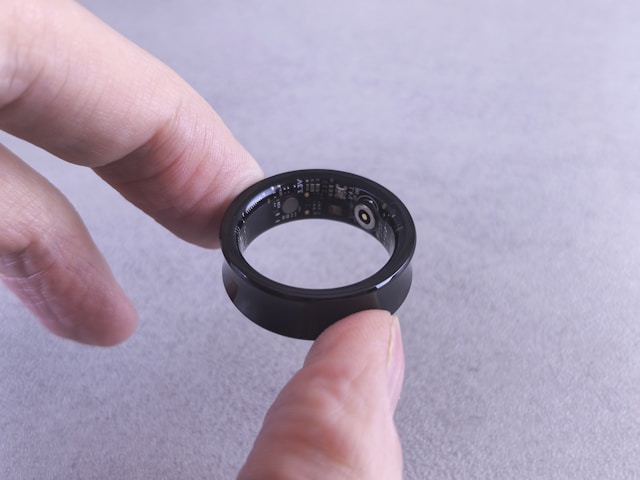
Going to bed wearing a watch and a ring would have seemed rather strange a few years ago.
And yet now, it’s not uncommon to hear something like:
“But how would I know if I slept well if I didn’t wear my Oura ring?”
I’m being slightly tongue-in-cheek – but wearable fitness devices have exploded in recent years, and more and more people are relying on them to interpret their health.
Which raises an important question:
Can over-reliance on this data start to work against us?
There are two common schools of thought when it comes to wearables and health tracking:
“Just trust your body” vs “If it’s not measured, it’s not real.”
My view sits somewhere in the middle.
Trust in your body is incredibly important. That kind of trust doesn’t just happen – it’s built over time through learning to listen, interpret, and stay present in your body.
And…wearables can support that process.
When used with a bit of awareness and intention, they offer useful information that can actually help you build self-trust, rather than replace it.
Let’s take a closer look at what these devices are actually measuring…and where they can help, and where they fall short.
Wearables and Recovery Metrics
Wearable devices like the Apple Watch, Garmin watches, WHOOP strap, and Oura Ring aim to quantify something that has traditionally been quite subjective:
How recovered are you – and how much stress can your body handle today?
They do this by tracking physiological signals and translating them into simplified outputs like readiness, recovery, or strain scores.
What Are Wearables Actually Measuring?
At the core, most devices are drawing from a few key inputs.
Heart Rate Variability (HRV)
HRV looks at the variation in time between heartbeats and is often used as a proxy for autonomic nervous system balance.
In simple terms:
- Higher HRV is generally associated with more parasympathetic (“rest and digest”) activity
- Lower HRV tends to reflect stress, fatigue, or incomplete recovery
An important nuance here is that HRV is highly individual. Your baseline matters far more than any comparison to someone else, and trends over time are far more meaningful than a single daily reading.
Resting Heart Rate (RHR)
Your resting heart rate is your baseline heart rate at rest.
When it’s elevated above your usual range, it can reflect that your body is under some form of strain – whether that’s from fatigue, illness, stress, or incomplete recovery.
Sleep Tracking
Most wearables place significant emphasis on sleep, and for good reason.
They estimate:
- Total sleep time
- Sleep stages (light, deep, REM)
- Sleep consistency
While not perfectly accurate in staging, they do offer a useful overview. Sleep remains one of the most important inputs into recovery, and disruptions here tend to show up clearly across other metrics.
Respiratory Rate and Temperature
Subtle shifts in breathing rate or body temperature can signal changes in stress, illness, or hormonal state.
This becomes particularly relevant for women navigating hormonal fluctuations, where these changes may reflect internal shifts rather than external load.
Activity Load / Strain
This is typically calculated based on heart rate, movement, and exercise duration.
From there, devices compare your recent activity load to your recovery status, essentially asking:
“Did you do more than your body was ready for?”
How This Becomes a “Recovery Score”
Each platform uses its own algorithm, but most recovery or readiness scores are built from a combination of:
- HRV trends
- Resting heart rate
- Sleep quality
- Recent training load
This is then simplified into a recommendation – something along the lines of:
“You’re ready to push” or “You should prioritise recovery.”
Where This Gets Interesting (and Problematic)
Recovery metrics do offer real value.
They can help build awareness of invisible load – things like stress, poor sleep, or early illness. They also reinforce the idea that rest is not a failure of training, but an essential part of it. (Yes, you know how I feel about rest 💥) Used well, these metrics can support more sustainable pacing.
But…there is another side to this.
The Limitations
It’s easy to slip into the mindset that if something can be measured, it should always be optimised. And while optimising is often very helpful, when overused it can also pull us away from life, spontaneity, and actually experiencing our bodies. Meh.
When we measure everything, we also run the risk of outsourcing trust – relying on the device instead of developing our own internal awareness.
So there are a few things worth keeping in mind.
First, these metrics are interpretations, not absolute truths. Algorithms don’t fully capture your lived experience, and devices can misread – especially when looking at things like sleep stages or HRV in isolation.
Second, over-reliance can start to disconnect you from your body. It’s not uncommon to see people push through fatigue because “my watch says I’m fine”, or avoid movement entirely because “my recovery score is low”. Over time, that can shift into a deeper sense of body mistrust.
And third, HRV in particular is influenced by far more than just training. Stress, alcohol, illness, travel, and hormonal changes all play a role – often significantly.
Recovery Metrics and Hormone Cycles
Hormonal fluctuations have a direct influence on the autonomic nervous system – which is exactly what HRV and resting heart rate are reflecting.
This applies both to the monthly menstrual cycle and to the more complex hormonal shifts of perimenopause.
Without this context, what many women interpret as “poor recovery” is often just normal physiology.
Menstrual Cycle: Predictable Patterns (in Theory)
During the follicular phase (from the start of your period to ovulation), oestrogen gradually rises while progesterone remains low.
This phase is often associated with:
- Higher HRV
- Lower resting heart rate
- A greater sense of energy and resilience
Many people find they tolerate load better and feel more capable during this time.
In the luteal phase (post-ovulation to the start of the next period), progesterone becomes the dominant hormone, and body temperature rises slightly.
Here, we often see:
- A drop in HRV
- An increase in resting heart rate (often by ~3–10 bpm)
- Lower recovery or readiness scores
This can feel like increased fatigue, reduced stress tolerance, and a greater need for recovery.
And importantly – this is not dysfunction. It’s a normal, expected physiological shift.
What Wearables Often Miss
Most wearable algorithms don’t fully account for cycle phase.
So the natural changes of the luteal phase – lower HRV and higher RHR – are often flagged as “poor recovery” or “strain,” when in reality, your body is simply operating within a different hormonal context.
Perimenopause & Menopause: Less Predictable, More Variable
The hormonal landscape of perimenopause is far less predictable.
Oestrogen doesn’t just decline – it fluctuates, sometimes quite dramatically. Progesterone trends downward, and the nervous system often shifts toward increased sympathetic (stress-related) activity.
This creates a system that is not only different, but often inconsistent from day to day.
From a metrics perspective, this can look like:
- Generally lower HRV
- Greater variability in readings
- Less predictable recovery patterns
Resting heart rate may sit slightly higher at baseline and fluctuate more, particularly in response to poor sleep, stress, or night sweats.
Sleep disruption plays a significant role here. Night waking, temperature dysregulation, and reduced sleep quality alone can lower HRV, raise RHR, and significantly impact recovery scores.
The Wearable Trap in Perimenopause
This is where wearables can become discouraging.
When there’s no clear pattern and recovery scores remain consistently low, it’s easy to feel like you’re “failing” recovery.
But often, what’s actually happening is that your baseline has shifted.
The Clinical Insight
HRV and resting heart rate are not just reflecting training load.
They are reflecting a much broader picture, including:
- Hormonal state
- Nervous system balance
- Sleep quality
- Emotional and physiological stress
Reaction Time: What Wearables Don’t Capture
Most consumer wearables don’t measure reaction time directly in their recovery metrics.
But in performance settings, measures like reaction time are sometimes used to detect cumulative fatigue – capturing how quickly the brain can process and respond.
It’s a useful reminder that recovery isn’t just physical or cardiovascular. It’s neurological too.
What’s interesting is that when reaction time slows, athletes often feel it. They describe feeling flat, sluggish, or slightly uncoordinated – often before performance visibly drops.
Did you notice it? There’s something important there:
The subjective experience mirrors the objective measure.
That cumulative fatigue matters. Push too hard in that state, and the strain begins to show up across the body, the nervous system, and even the immune system.
Which brings us back to the value of learning to stay present in your body. Tracking your scores and living in your skin.
A simple tool that can help build this awareness is the Energy Bank Check-In Chart (which I shared in Check In with Your Energy Bank: Learn to Read Your Body’s Capacity). Used regularly, alone or alongside data like HRV, RHR, and training load, it helps you recognise patterns – what drains your energy, what restores it, and how your body communicates that.
The Real Intersection: Data and Awareness
My patients often laugh that they can’t get a straight yes-or-no answer out of me.
Because the reality is that the body is complex, and the “right” decision often depends on layers of context.
But one thing does hold true:
The better your relationship with your body, the more resilient you become.
Wearables should support that relationship – not undermine it.
Ideally, they sit at the intersection of:
- Objective data (what can be measured)
- Subjective experience (what you feel)
The most useful approach is to treat recovery metrics as data points, not decision-makers.
In practice, that might look like shifting from:
“My recovery score is low, I shouldn’t train”
To something more curious:
- What is the data showing me?
- What might my body be navigating right now?
- How do I actually feel today?
- What kind of movement or rest would support me here?
💡Practical Takeaways
If you take nothing else from this, let it be this:
- Track trends, not daily scores
Especially across a full cycle (if applicable) - If you menstruate, expect luteal phase shifts
Lower HRV and higher RHR are not a problem – they’re physiology - In perimenopause, your baseline may change
And that’s okay. - Pair your data with body awareness
Regular check-ins (like the Energy Bank tool) help build this skill
So as you bring this into your daily life, try shifting from asking:
“Am I recovered enough to exercise?”
To:
“What kind of movement does my body have capacity for today?”
Wearables can inform that decision – but they shouldn’t make it for you.
Stay curious. And keep learning to trust what your body is telling you.
As it’s so beautifully put in August Rush:
“The music is all around you. All you have to do is listen.”
And in this case, that “music” is your body.
🤍 Carmen
More on Rest & Recovery
🧘♀️Tired all the time? Different types of rest can help you recharge
🛌Sleep: The Foundation of Good Rest
💵Check In with Your Energy Bank: Learn to Read Your Body’s Capacity
🚶♂️➡️Mindful, Restorative Movement: Gentle Practices to Reconnect Body and Mind
🤣Why Laughter Boosts Recovery (Even When You Fake It!)
⏸️Mini-Reset: A Simple Way to Pause and Power Back Up
🫧Finding Rest Through Play: Simple Ways for Adults to Recharge
📱Revenge Bedtime Procrastination: Why We Stay Up Too Late
Disclaimer: Our content is for general information only and isn’t a substitute for medical or health advice. Reading or using this content doesn’t create a practitioner-client relationship. Please speak to your healthcare provider before making changes to your health, movement, or wellness routine. Read our full disclaimer here.