

Full disclosure…I’ve been waiting to write this post. Because the importance of mindful presence in your body simply cannot be overemphasised – I see it every day as a physiotherapist.
People who struggle with mind-body connection often find both mental and physical wellbeing more challenging. Learning to use movement for rest is a wonderful entry point to rebuilding a strong relationship with your body.
In essence, it’s about using gentle movement to fill your cup. I’m so excited to share this with you…so let’s explore how movement can support true rest and recovery.
Why Rest and Recovery Deserve More Attention
In our rushed, “always-on” culture – where busyness has become a badge of honour – our understanding of true rest and recovery often gets a little muddled. We tend to think of rest as just sleep or collapsing on the couch…and then feel guilty for doing even that.
But in reality, we thrive when we rest in a variety of different ways, built on a foundation of good sleep – themes we’ve been exploring throughout this series (links below).
If you think of rest as nourishment for your body, it’s easier to see how different types of rest support different systems. Active rest – physically moving your body in gentle, restorative ways – nourishes both your nervous system and your tissues.
Active rest can also blend with other forms of rest: a walk outdoors includes creative rest, a yoga class offers social rest – together, they recharge you even more fully.
At the heart of restorative movement is presence and gentleness: moving not to burn energy, but to restore it.
What Is Mindful, Restorative Movement?
My definition of mindful movement:
Moving with deep, intentional attention on your body and its sensations, with presence in the moment.
In their article, Proietti et al (2024) describe it as “the purposeful regulation of movement and coordination between the breath, mind, and body.”
As you can see, mind-body connection is front and centre – and this is where I get excited. It’s a beautiful integration of top-down and bottom-up regulation. You use your intentional mind to guide and control movement (top-down), while your movement and breath influence your nervous system and feed back to calm and regulate your mind (bottom-up).
The conscious presence in your body – cognitively and emotionally – with life and movement is sometimes called embodiment. With my patients, I often talk about being in your body: really tuning in to its messages and signals. Feeling how your breath moves you, and how emotions sweep through your body.
While this language can imply that mind and body are separate, that’s not really true. They are deeply intertwined – “an embodied mind manifests and integrates the current state of the entire organism as it interacts with its environment” (Proietti et al, 2024).
Yet, we can lose intentional contact between these systems for many reasons: trauma, chronic stress, or simply ignoring our body’s cues – like pushing through fatigue day after day. Over time, this creates a disconnect, and both mind and body begin to suffer.
Mindful movement helps to reintegrate these systems, restoring balance and communication between them – and with that comes a whole host of physical and emotional benefits.
In mindful, restorative exercise, the focus is always on the present moment and the sensations of movement – not on pushing harder or zoning out. You slow down, breathe, and bring intentional presence to every movement.
Let’s explore what actually changes in your mind and body when you practice mindful movement.

The Benefits of Gentle, Mindful Movement
Mindfulness and movement each have powerful effects on your body and mind – but when combined, they work together to restore balance across your whole system.
Let’s look at how mindful, restorative movement supports both mental and physical well-being.
🧠 Mental Benefits of Mindful Movement
Calms the mind
Gentle, mindful movement helps regulate stress hormones like cortisol, reducing stress and anxiety. It reduces rumination and overthinking. It promotes relaxation, steadies your mood, and boosts your body’s natural feel-good hormones.
Sharpens focus and attention
Mindfulness is, at its core, a practice of focused attention. Slowing down and tuning into your movement strengthens your ability to concentrate – like training your brain’s “attention muscle.”
Supports emotional awareness and regulation
We call emotions feelings for a reason – they’re experienced in the body as sensations: a tight chest, a pit in your stomach, a flush of warmth. Mindful movement helps you notice these sensations and understand your emotional cues. Over time, this builds metacognition (awareness of your thoughts and feelings) and improves emotional regulation.
Improves sleep quality
Mindful movement calms the nervous system and helps your body unwind. Incorporating gentle stretching, breathing, or slow mobility work into your evening routine can signal to your body that it’s time to rest.
💪 Physical Benefits of Mindful Movement
Enhances interoception (your internal awareness)
Interoception is your ability to sense what’s happening inside your body – your breath, your joint position, the source of your effort. Mindful movement strengthens this mind-body bridge, helping you move with awareness and respond to what your body truly needs.
💡 Physio tip: Interoception is essential for long-term movement health. In clinic, I see that people who are more present in their bodies tend to recover faster and get more out of their exercises. Body awareness means better movement quality, more accurate muscle activation, and quicker progress toward treatment goals.
Supports tissue health
Gentle, restorative exercise nourishes your tissues – improving flexibility, circulation, and the mobility of joints, muscles, fascia, and nerves. This helps your body stay supple and resilient.
Builds physical resilience – gently
Mindful movement develops strength, balance, and posture without overloading the system. Awareness of breath and movement enhances coordination, improves safety, and increases enjoyment in exercise.
Regulates the nervous system
Slow, conscious breathing, and ‘breathing though movement’ activates your parasympathetic (“rest and digest”) response, shifting you out of fight-or-flight mode. This feedback loop calms the central nervous system and supports emotional stability – one reason why yoga, TRE, and similar practices are powerful tools for recovery and trauma support.
💡 Physio tip: Mindful movement can also play a key role in chronic pain management. It strengthens the body while helping to “turn down the dial” on an overactive pain system. Awareness, safe movement, strength, and flexibility all work together to support recovery.
In Short
Mindful, restorative movement doesn’t just strengthen your body – it helps your mind and nervous system recover too. The more present you are in your body, the more effectively it can repair, rebalance, and thrive.
Examples of Mindful, Restorative Movement Practices
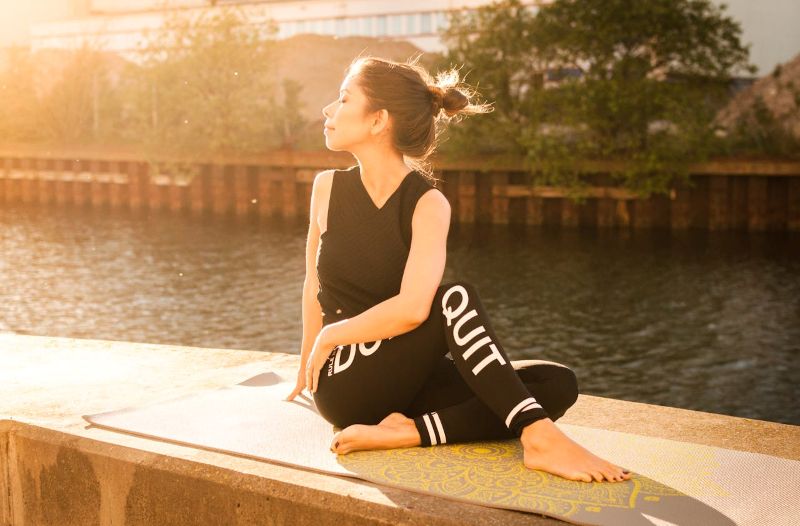
When we talk about mindful movement, we’re referring to movement done with presence – an awareness of breath, sensation, and how your body feels as it moves. Certain forms of exercise naturally lend themselves to this deep mind-body connection:
- Yoga – Combines breath, alignment, and flow to cultivate awareness and presence.
- Tai Chi & Qigong – Slow, deliberate sequences that improve balance and coordination while calming the nervous system.
- Gentle Pilates – Uses breath to guide deep core engagement and control through each movement, reconnecting the mind and body.
- Stretching & mobility routines – Gentle, restorative movements that release tension and support relaxation.
Pilates, especially when practiced mindfully, is a beautiful example of restorative movement. It blends awareness, breath, and gentle strengthening to bring your body back into balance – physically and mentally. This is a big part of why I love Pilates so much, and why I built Body Renewal & Core Connection around it.
💡 Hint: Any movement can become a mindful movement practice! Whether it’s noticing the feel of water as you turn on the tap, or being fully aware of muscle tension at the bottom of a heavy back squat – it’s not the type of movement, but the presence you bring to it that makes it mindful. Some exercise forms just make that connection a little easier.
It’s also worth noting that while mindful movement is always beneficial, not all mindful exercise is restorative. You’ll still get the mental focus and clarity that come from being present during higher-intensity workouts (like strength training or cardio), but those sessions also draw more from your energy reserves.
Learning to recognise what your body needs each day – and choosing movement that matches that need – is key. Sometimes that’s a mindful walk or mobility flow; other times, it might be slowing down completely and letting your breath lead the way.
Ready to make this feel like yours? Below are simple ideas you can try in your day to turn mindful movement into something practical and joyful.
Create Your Own Mindful Movement Go-To’s
Different things work for different bodies and minds. While I love climbing a local koppie and sitting on a rock with my journal, that might not be someone else’s idea of a perfect physical refresh.
Here are a few ideas to get your creative juices flowing – try the ones that appeal, and start building your own “Mindful Movement Menu.”
A few ideas to start:
- Build a family tradition of a walk after your Sunday braai.
- Start your day with a gentle CARS routine while your coffee brews.
- Once a month, take a mindful nature walk – explore outdoors with your senses and notice how your body moves on different inclines and surfaces.
- Take a stretch class with a friend, practicing how to relax and breathe into the area that’s stretching.
Remember: mindful movement doesn’t need to be long or fancy. It’s simply about presence – a pause to check in with your body.
Here are a couple of practical tips to help your exploration.
Bonus Tips for Creating Your Mindful, Restorative Practice
Check in with your body – before and after.
A short body scan is a lovely way to do this. Ask yourself three simple questions:
• What’s my current mental energy level?
• Do I feel any areas of tightness or tension?
• How deep and easy is my breathing right now?
Remove distractions where you can.
Silence notifications on your watch and phone – it’s amazing how quickly your awareness deepens without digital interruptions.
Match movement to your energy.
Pace it according to what your mind and body need today. If you’re restless, try a walk; if you’re tired or stiff, linger in two or three gentle stretch poses and focus on your breath. Keep exploring and noticing what works for you – over time, you’ll start to recognise your own patterns.
Be un-self-conscious.
Focus on how it feels to move, not how you look. Let your breath lead the way.
Be patient.
Awareness and connection deepen with practice. Every moment of mindful movement adds up.

Getting Started with Restorative Movement
Don’t turn this into a big hurdle in your head – just get curious and start small. Even something as simple as a seated roll-down stretch from your chair or couch, repeated for five slow breaths, can shift how your body feels.
If you’d like a little more guidance as you begin exploring this, try the breath workouts in Days 1 and 2 of my free 3D Core Program – they’re the perfect entry point into mindful, restorative movement.
And as always, feel free to get in touch if you have questions or would like to share your favourite mindful movement rituals.
🤍 Carmen
References and resources:
📃 The role of a mindful movement program in health promotion – full article by Proietti et al., 2024. Shows how intentional movement improves mind-body integration and overall well-being.
📑 What is mindful movement? Plus 9 ways to get started – full article by the Calm Editorial Team.
This article is part of my Rest & Recovery series, where I’m exploring how to build habits that support deeper health and resilience:
Tired All the Time? Different Types of Rest Can Help You Recharge
Sleep: The Foundation of Good Rest
Revenge Bedtime Procrastination: Why We Stay Up Too Late
Finding Rest Through Play: Simple Ways for Adults to Recharge
Disclaimer: Our content is for general information only and isn’t a substitute for medical or health advice. Reading or using this content doesn’t create a practitioner-client relationship. Please speak to your healthcare provider before making changes to your health, movement, or wellness routine. Read our full disclaimer here.