
“My back is sore. Can you loosen it up so I can get back to normal life?”
I’m greeted by some version of this question almost daily in my practice.
And when I start asking about stress, sleep, diet, life and training load… I’m often met with a bit of sceptical resistance.
We tend to assume that pain and injury are simply bad luck – or the result of moving “wrong”. And that a simple mechanical treatment is going to magically resolve it.
But in reality, structure reflects the environment it lives in. When the system is overloaded or under-supported, tissues struggle to keep up. And that system physiology is influenced by a wide array of factors.
We’ll break that down in this post and look at what really impacts whole-body health and strength.
This post is part of the series Building Capacity for Life, where I share the fundamental concepts that underpin my philosophy of movement and health. Whole-person capacity sits at the very centre.
Your Body Is a System, Not Separate Parts
(Why physiology matters in injury and pain)
Although it’s much easier to think of it this way, your body isn’t a row of neat, siloed systems. Everything is intricately linked and works together as a combined system.
On the simplest level, pain and injury result from overload – either mechanical breakdown of tissue, or disruption of the nerve pathways that sense and regulate what you feel.
This is easy to see in acute injuries. Imagine rolling your ankle. A single event places more tension on the ligament than it can tolerate, and the overloaded tissue becomes damaged. There’s a clear cause-and-effect moment.
But it works quite differently with most gradual-onset pain and injuries.
What Creates Overload? The Physiology Behind Injury
To understand that, let’s look at the main aspects that work together in our movement system.
Within the combined system, overload can come from:
- Physical load (too much too soon, insufficient recovery)
- Recovery deficit (sleep, rest, downtime)
- Metabolic load (hormones, blood sugar, inflammation)
- Fuelling (restrictive patterns, missing micro- or macro-nutrients)
- Emotional and cognitive load (stress, deadlines, overwhelm)
- Relational load (conflict, disconnection, spiritual wellbeing)
- Previous life and injury history
Together, these create the overarching environment within the body – what we might call system homeostasis (I explain what homeostasis is in this post).
They also influence the ability of tissue to hold up under load (we discussed building physical capacity here).
And together, they determine whether we are more – or less – resilient to life and movement.
So I just said a sprained ankle is different because it’s an acute injury, right?
Well…let’s look at it a little differently.
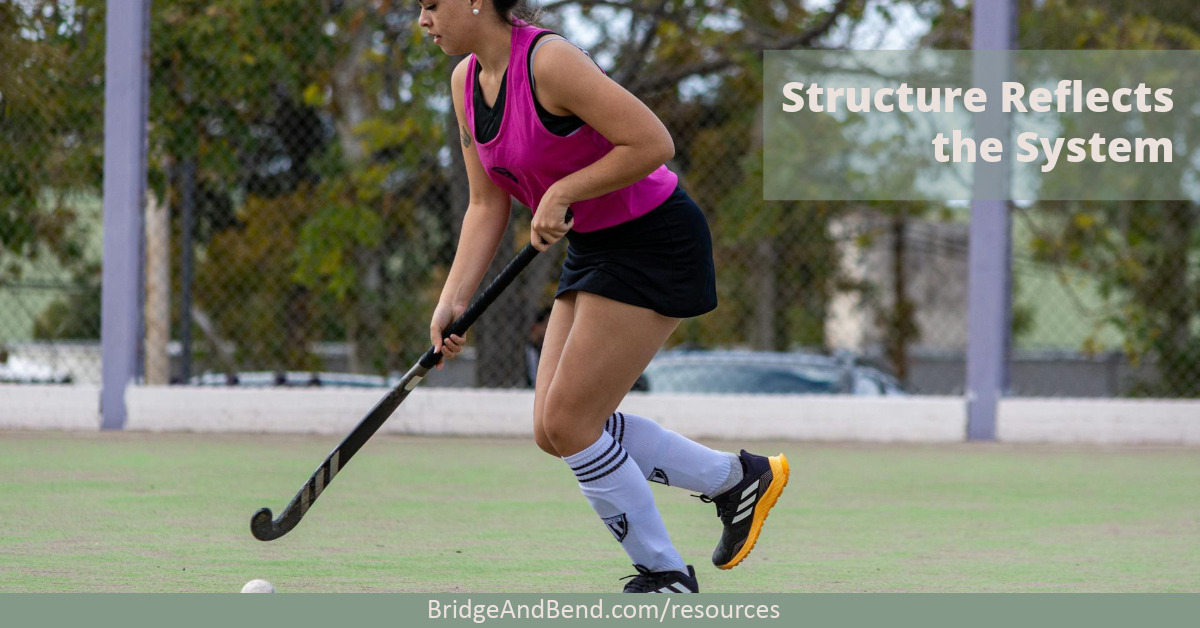
What if the person who rolled her ankle is a woman in her early forties who has just started playing field hockey again for the first time in 20 years – and rolls it while changing direction (unchallenged) on the field?
What if she played yesterday and the day before, and her body is stiff and sore (physical overload)? She had a work deadline, so she slept only four hours after finishing a presentation (recovery deficit), then walked into a high-stakes negotiation (stress load).
She’s worried about her body changing as she approaches perimenopause, so she’s been restricting her diet (under-fuelling the muscles that need to react and protect the ankle). She had a fight with her teenage daughter in the car that afternoon (relational stress)… and this is the same ankle she sprained three times in her teens and twenties (history).
Suddenly, that ankle sprain is a little less “just an injury,” right?
And this is even more true for traditional “overload” injuries like shin splints, neck strain, or rotator cuff pain.
Each small choice we make in our day adds up. The result? The resilience – or vulnerability – of body and mind.
Tip: One massively underrated skill is the ability to check in with yourself and develop a gut-level sense of how much your body can take on a given day.
It’s part of learning to listen to your body – and rebuild trust in it.
I explored this more in the post Check In with Your Energy Bank: Learn to Read Your Body’s Capacity in the Rest & Recovery series.
Take-Home Concept: Physiology Before Structure
Structure reflects the environment it lives in.
So when you next experience pain…
Instead of asking, “What did I break?”
Try asking, “What was my system carrying?”
That simple shift opens the door to understanding injury in context – and to addressing the whole-person factors that influence how you’re feeling.
If you’re struggling with unexplained niggles or recurring pain, book to see your physio. A good assessment will look at the mechanical component – but also screen for the broader influences on your underlying physiology, referring to other professionals where needed. (If you’re local, you can book a physio session with me in Johannesburg)
And the good news?
By building trust in your body, gradually increasing physical capacity, and embedding supportive health habits into your life…you make the system more resilient.
Not just for sport.
Not just for pain.
But for a full life.
Next week, we’ll explore a mindset shift that helps us think about building rather than simply protecting (or blindly hoping things go well 😉): health-span versus life-span.
You can subscribe below so you don’t miss it.
🤍 Carmen
Further Reading
Read more about Building Capacity for Life:
📃 Why Information Isn’t Enough (and What Actually Creates Change)
🥔 The Potato Bag Principle: How Bodies (and Habits) Actually Get Stronger
🧠 The Mind-Body Connection: Why How You Think Affects How You Move
🧘♀️ Why Mindful Presence in the Body Matters for How You Move
Disclaimer: Our content is for general information only and isn’t a substitute for medical or health advice. Reading or using this content doesn’t create a practitioner-client relationship. Please speak to your healthcare provider before making changes to your health, movement, or wellness routine. Read our full disclaimer here.